Labor is one of the largest expenses in any cannabis operation, especially across cultivation and manufacturing. Teams are handling everything from planting and harvesting to processing, packaging, and compliance reporting. On paper, staffing levels may seem reasonable, but the way work is structured often tells a different story.
A significant portion of labor hours is spent on tasks that do not directly contribute to production. Manual data entry, inventory reconciliation, and compliance tracking all take time away from the work that actually drives revenue. These inefficiencies are easy to overlook at first, but they compound quickly as operations grow.
As more processes are added and more systems are introduced, teams end up doing more work just to keep everything aligned.
Why disconnected systems increase labor demands
Many cannabis operators rely on a mix of software tools, spreadsheets, and manual processes to manage their business. While each tool may serve a specific purpose, the lack of integration creates additional work for employees.
Information has to be entered multiple times across different systems, which increases both the time required and the likelihood of errors. Teams often spend hours reconciling inventory, updating records, and verifying data instead of focusing on production or process improvements.
This fragmentation also creates communication gaps between departments. Cultivation, manufacturing, and finance teams may all be working with slightly different versions of the same data, which leads to delays and confusion.
Over time, these inefficiencies translate directly into higher labor costs without improving output.
What a more efficient operation looks like
Reducing labor costs is not just about cutting staff. It is about improving the way work gets done so that teams can accomplish more with the same or fewer resources.
In a more efficient operation, data is captured once and flows automatically across the system. Inventory updates as production happens, compliance reporting is built into workflows, and financial data reflects real time activity.
This reduces the need for manual input and eliminates many of the repetitive tasks that consume valuable time. Employees can focus on production, quality, and process optimization rather than administrative work.
Efficiency at this level creates a measurable impact on both cost and output.
How 365 Cannabis helps streamline labor
365 Cannabis is designed to reduce the manual work that drives up labor costs by bringing key business functions into a single, connected system. Instead of relying on multiple tools, operators can manage cultivation, manufacturing, inventory, compliance, and finance within one platform.
This integration allows data to flow automatically between departments, eliminating the need for duplicate entry and reducing the risk of errors. Tasks that once required multiple steps can be completed in a fraction of the time.
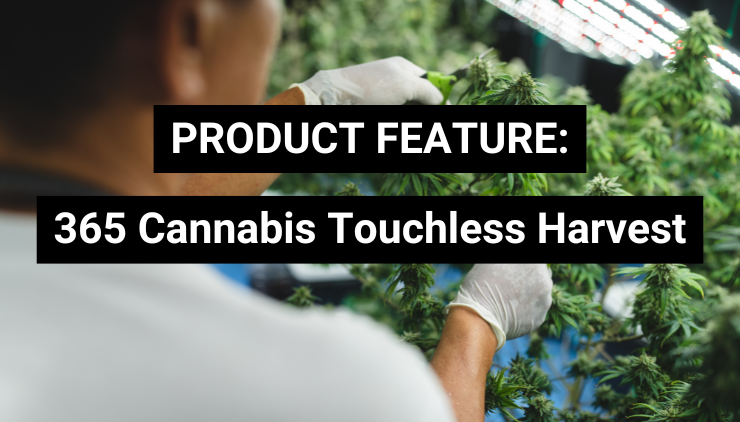
Features like real time inventory tracking and touchless workflows during processes like harvest help teams move faster without sacrificing accuracy. Because the system integrates with compliance platforms like Metrc, reporting is handled as part of daily operations rather than as a separate task.
The result is a more streamlined workflow that reduces the overall time required to manage operations.
The impact on your bottom line
When manual processes are reduced and systems are connected, labor efficiency improves across the entire organization. Teams are able to handle higher volumes of work without needing to scale headcount at the same rate.
This creates a direct reduction in labor costs while also improving productivity. Employees spend less time on repetitive tasks and more time on work that supports growth and quality.
For operators, this means better margins, more predictable operations, and a stronger foundation for scaling the business.
What this means for growing operators
As cannabis businesses expand, the ability to manage labor effectively becomes increasingly important. Without the right systems in place, growth often leads to higher costs and more complexity.
By investing in a unified ERP platform, operators can create a more efficient environment where teams are supported by technology rather than slowed down by it. This allows businesses to grow without losing control of their costs or processes.
If your team is spending too much time on manual tasks and disconnected workflows, there is a better way to operate.
Schedule a demo with 365 Cannabis to see how a unified ERP system can help reduce labor costs and improve efficiency across cultivation and manufacturing.