
Rescheduling Really Just Happened.
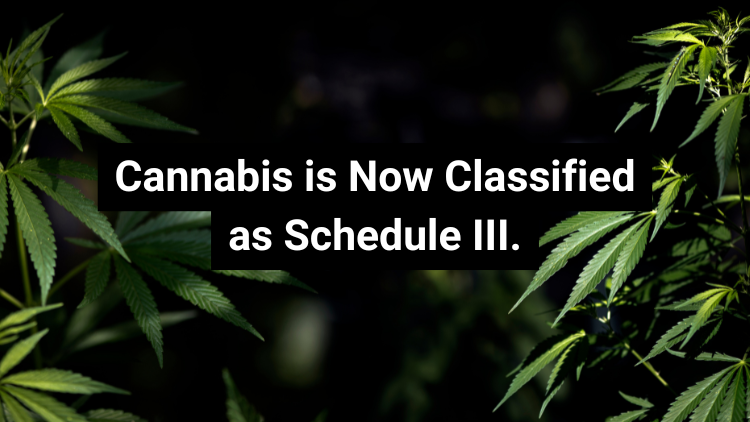
After years of rumors, hearings, and back and forth., cannabis has officially been moved from Schedule I to Schedule III under the Controlled Substances Act. It’s actually official this time.
It is also not legalization. It does not magically fix banking, interstate commerce, or the patchwork of state rules you are already dealing with. What it does do is change how the federal government looks at cannabis, especially on the medical side, and that shift has ripple effects you are going to feel.
For the first time at the federal level, cannabis is being recognized as having accepted medical use. That alone changes the conversation in a way the industry has been pushing for a long time.
What Actually Changed
Moving to Schedule III pulls cannabis out of the category reserved for substances with no medical value and puts it into a group that is regulated but accepted in medical settings.
That matters more than it sounds like it should. It makes research easier to navigate. It gives healthcare providers more room to engage. It starts to bring cannabis into a more traditional framework instead of keeping it off to the side. There is still area to identify exactly what elements, uses, and kinds of products are qualified as medicinal, but this is a first step.
But if you are running a business, the question is not what it means philosophically. It is what changes when you open your laptop tomorrow morning.
The Tax Implications of Cannabis Rescheduling
Let’s just call it what it is. The biggest impact here is tied to Internal Revenue Code Section 280E.
For years, 280E has been a gut punch. You could be doing everything right operationally and still feel like the numbers do not add up because you cannot deduct basic expenses like payroll, rent, or marketing.
With cannabis moving to Schedule III, that pressure starts to ease for operators that qualify, especially in state licensed medical programs. Being able to take standard deductions changes the math in a very real way. Margins look different. Cash flow looks different. Planning actually starts to feel grounded again.
It is not an exaggeration to say this could be the difference between scraping by and having room to grow, for those that qualify of course.
Addressing the Elephant in the Room
If your feed looks split between celebration and skepticism, that is because this is not a clean sweep across the industry. There’s still a lot of work to be done.
Medical cannabis is where most of the benefit lands right now. Adult use is still sitting in Schedule I. So if you operate in both, you are now living in two different realities at once.
That is where things get tricky. One side of your business might get tax relief while the other does not. That is not just frustrating, it adds real complexity to how you track costs, report financials, and stay compliant.
What This Means for Your Operations
This is the part that does not make headlines but matters the most day to day.
Operators need tighter control over inventory, cleaner separation between medical and adult use products, and financial reporting that actually reflects what is going on. Not what you hope is going on. Not what you piece together at the end of the month. What is actually happening in real time.
If your systems are stitched together, this is where that starts to hurt. If your data lives in five places, this is where it slows you down.
If your operation is already centralized and your processes are dialed in, this is manageable. Not easy, but manageable. That difference is going to show pretty quickly across the market.
The Long Game Nobody Should Ignore
It is easy to get stuck on the immediate impact, especially around taxes, but there is a bigger shift happening in the background.
Schedule III makes research more accessible. It gives the medical side of cannabis more legitimacy. Over time, that leads to better products, more consistency, and a stronger foundation for the industry as a whole.
You are not going to feel that next quarter, but it is part of where things are heading. Just be warned, this move does not tie everything up nicely.
Banking is still a challenge. Interstate commerce is still restricted. Full federal legalization is still an open question. There are going to be more conversations, more changes, and probably a few curveballs. Right now, the industry is in that in between phase where some things are getting easier while others stay the same. That is usually where the operators who are prepared start to pull ahead.
What Smart Operators are Doing Right Now
The teams that are moving well through this are not waiting for perfect clarity.
They are already adjusting financial models with 280E relief in mind. They are getting serious about separating medical and adult use workflows. They are cleaning up their data so reporting is not a guessing game.
And they are looking hard at whether their systems can actually support where the industry is going, not just where it has been.
Cannabis moving to Schedule III is a meaningful step forward. It changes how the federal government views the plant, it creates real financial relief for part of the industry, and it opens the door for more research and credibility. It also adds a layer of complexity that is not going away anytime soon.
Some operators are going to use this moment to get sharper and move faster. Others are going to feel the pressure to keep up.
Where 365 Cannabis Fits into This
This is exactly the kind of shift 365 Cannabis was built for.
When tax treatment changes, when compliance gets more layered, when you need clean separation between medical and adult use without slowing your team down, that is where having everything in one system starts to matter.
If you want to see how operators are handling Schedule III changes without adding more manual work or risk, take a look at what 365 Cannabis can do across finance, cultivation, manufacturing, and compliance. It is a quick way to see what your operation looks like when everything actually connects.